Introduction
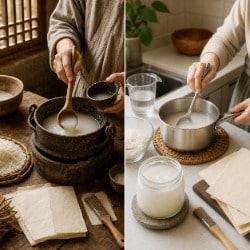
Rice glue is one of those simple preparations that reminds us how much traditional work begins with ordinary materials. Before the brush touches the paper, someone has to clear the table, prepare the paste, choose the sheet, and make the space ready.
Rice glue is made from rice, water, heat, and patience. It has been used in paper craft, mounting, repair work, and traditional-style paper preparation because it is gentle, natural, and easy to make in small batches.
For talisman work, altar labels, ritual notes, paper charms, and biodegradable outdoor offerings, rice glue has a special usefulness. It is not strong like modern synthetic glue. It is not waterproof. It will not hold forever.
And sometimes, that is exactly the point.
What Is Rice Glue?
Rice glue is a natural adhesive made by cooking rice until the starch breaks down. That starch gives the glue its holding power.
Once the rice is very soft, it is mashed, strained, or blended into a smooth paste. When brushed thinly onto paper and allowed to dry, it creates a light bond that works especially well with porous materials.
Rice glue is best suited for:
- Paper
- Handmade paper
- Lightweight cardboard
- Cloth-backed paper
- Paper charms
- Scroll-style craft work
- Labels
- Mounting pieces
- Temporary talisman work
It is not a heavy-duty glue. Think of it as a paper glue, not a repair glue.
Why Use Rice Glue?
Modern glue is easy to buy, so making rice glue may seem unnecessary at first. But rice glue has several advantages.
It is inexpensive. It is non-toxic. It has no sharp chemical smell. It can be made fresh in small amounts. It dries with a soft, natural finish. And when used for outdoor ritual work, it is biodegradable.
That last point matters.
Rice glue is not useful outdoors when you need something permanent. Rain, humidity, insects, and soil contact will break it down. But for temporary outdoor talismans, seasonal offerings, or paper charms meant to weather away, that is an advantage rather than a flaw.
It allows the work to complete its purpose and return to the environment without leaving behind plastic adhesive or synthetic residue.
In that sense, rice glue fits beautifully with impermanent ritual craft. It holds while it is needed. Then it lets go.
Ingredients
You will need:
- 1 cup white rice
- 3 to 4 cups water
- A small saucepan
- A spoon or potato masher
- A fine strainer or blender, if you want a smoother paste
- A clean jar with a lid
Short-grain white rice is usually best because it releases starch easily. Regular white rice will also work. Brown rice is less ideal because the bran can make the paste rougher and less smooth.
Basic Rice Glue Recipe
Lightly rinse the rice once or twice. Do not wash it until the water runs completely clear. For glue, the starch is useful.
Place the rice and water in a saucepan. Bring it to a boil, then reduce the heat and let it simmer.
Cook the rice much longer than you would for eating. The goal is not fluffy rice. You want soft, overcooked rice that begins to break apart.
Let it simmer for 30 to 45 minutes. Stir occasionally so it does not stick to the bottom of the pan. If the mixture becomes too dry, add a little more water.
When the rice is extremely soft, remove it from the heat and let it cool slightly.
Mash the rice thoroughly with a spoon or potato masher. For a smoother glue, press it through a fine strainer or blend it carefully. Add warm water a little at a time until the paste reaches the consistency you want.
For most paper work, aim for a texture like thin school glue or heavy cream. For heavier paper, you may want it slightly thicker.
How to Use Rice Glue
Apply rice glue in a thin, even layer. A small brush is usually the easiest tool.
Use less than you think you need. Too much glue can wrinkle paper, soak through delicate sheets, or make drying uneven.
Once the glue is applied, press the paper gently into place. Smooth from the center outward to remove air bubbles. If you are mounting a piece, place a clean sheet of scrap paper over it and weigh it down while it dries.
Drying time depends on the paper, the amount of glue, and the humidity in the room. Thin paper may dry fairly quickly. Heavier work may need several hours or overnight.
Adjusting the Texture
Rice glue is easy to adjust.
If it is too thick, stir in warm water a little at a time.
If it is too thin, return it to low heat and simmer it until some of the water evaporates.
If it is lumpy, strain it or blend it again.
For talisman papers or delicate craft work, a smoother paste is usually better. For rougher craft projects, a thicker paste may be fine.
Outdoor Use and Biodegradability
Rice glue should not be used for outdoor projects that need to last. It is not waterproof, and it will break down when exposed to weather.
But for some forms of talisman work, temporary charms, seasonal offerings, and biodegradable ritual craft, this is one of its strengths.
A paper charm made with rice glue can be placed outdoors and allowed to fade, soften, loosen, and return. The glue does not fight the weather. It participates in the natural ending of the work.
This makes rice glue especially useful when the goal is not permanence, but completion.
It may be appropriate for:
- Temporary outdoor talismans
- Seasonal paper offerings
- Biodegradable ritual craft
- Natural paper charms meant to weather away
- Temporary altar labels
- Practice talismans
- Paper work meant to return to the earth
Use common sense. Avoid leaving paper in places where it would be treated as litter, and use natural paper and inks when the work is meant to break down outdoors.
Storage
Rice glue is made from food, so it does not keep for long.
Store it in a clean, sealed jar in the refrigerator and use it within 3 to 5 days. If it smells sour, changes color, grows mold, or separates badly, throw it away and make a fresh batch.
Small batches are best. Rice glue is easy enough to make that there is usually no reason to preserve a large amount.
A Simple Practice Note
If you are using rice glue as part of talisman preparation or altar craft, keep the process clean and deliberate.
Clear the workspace. Use clean tools. Prepare only what you need. Let the making of the glue become part of the larger act of preparation.
This is not about making the process complicated. It is about giving the work your full attention.
In many traditional arts, the small steps matter. The way the paper is handled, the way the brush is cleaned, the way the paste is made — all of it shapes the quality of the finished work.
Rice glue is humble, but that humility is part of its usefulness.
Best Uses for Rice Glue
Rice glue works well for:
- Paper talismans
- Handmade ritual notes
- Altar labels
- Paper charms
- Collage
- Scroll mounting
- Lightweight book repair
- Natural paper crafts
- Temporary outdoor paper work
- Biodegradable ritual offerings
It is not the right choice for:
- Outdoor work that needs to be permanent
- Waterproof projects
- Heavy repairs
- Plastic, metal, or glass
- Anything that needs an industrial bond
Final Thoughts
Rice glue is simple, but it teaches a useful lesson: not every material has to be powerful to be valuable.
Some materials are valuable because they are quiet. They do their job gently. They support the work without calling attention to themselves.
For paper craft and talisman preparation, rice glue offers that kind of usefulness. It is plain, natural, and easy to make. It can hold a paper charm together for a time, then release it back into the world.
With rice, water, and a little patience, you can prepare a soft adhesive that belongs beautifully in a careful, traditional workspace — especially when the work is meant to be temporary, natural, and complete.
Magical Altars & Ritual Goods
Historically informed altar goods inspired by Taoist ritual practice—objects for protection, alignment, contemplation, and continuity. Designed for modern practitioners who value meaning, restraint, and tradition over spectacle.
Explore Altar GoodsFrequently Asked Questions About Rice Glue
What is rice glue?
Rice glue is a simple natural adhesive made by cooking rice until its starch breaks down into a paste. It is especially useful for paper craft, altar labels, paper charms, scroll-style work, and temporary talisman preparation.
What kind of rice is best for making rice glue?
Short-grain white rice is usually best because it releases starch easily and creates a smooth paste. Regular white rice can also work. Brown rice is less ideal because the bran can make the glue rougher and less even.
Is rice glue strong?
Rice glue is strong enough for light paper work, but it is not a heavy-duty adhesive. It works best with porous materials like paper, handmade paper, light cardboard, and cloth-backed paper. It is not meant for plastic, metal, glass, or structural repairs.
Can rice glue be used for talisman work?
Yes. Rice glue can be useful for paper talismans, altar labels, ritual notes, practice sheets, and biodegradable paper charms. It is a gentle, natural material that fits well with careful preparation and temporary ritual craft.
Is rice glue good for outdoor use?
Rice glue is not good for outdoor projects that need to last because it is not waterproof. However, that can be an advantage for temporary outdoor talismans, seasonal offerings, and biodegradable ritual craft, where the paper and glue are meant to break down naturally over time.
How long does rice glue last?
Fresh rice glue usually lasts about 3 to 5 days when stored in a sealed jar in the refrigerator. Since it is made from food, it should be thrown away if it smells sour, changes color, grows mold, or separates badly.
Can rice glue be made thinner or thicker?
Yes. If rice glue is too thick, stir in a little warm water. If it is too thin, simmer it gently until some water evaporates. For delicate paper or talisman work, a smooth, brushable paste is usually best.
Is rice glue biodegradable?
Yes. Rice glue is biodegradable because it is made from rice and water. This makes it useful for natural paper craft and temporary outdoor ritual work where the materials are intended to return to the environment.
Related Articles
Taoist Magic: History, Talismans, Rituals, and Modern Practice
Small Taoist Shrines: Spaces of Harmony and Connection
Personal Altars in Taoism: From Ancient Traditions to Creating Your Own Sacred Space
Taoist Magic: History, Talismans, Rituals, and Modern Practice
The Origins of Taoist Magic: Early Classical Foundations
Taoist Talismans: History, Meaning, and Ritual Use Explained
Common Taoist Talismans: Types, Meanings, and Uses
Taoist Protection Talismans: Methods, Meaning and Common Types
Anatomy of Taoist Protection Talismans: Symbols and Structure
Paper, Ink, and Altar: Materials Behind Taoist Talismans
How to Prepare Rice Glue for Paper Craft and Talisman Work
You Are the Talisman: Understanding Daoist Talismans
Mystical Taoist Tapestries: Symbols of Power and Pathways to Spirit